Why Social Value Matters: From Compliance to Competitive Advantage
Social value is no longer just a compliance requirement. It is becoming a key factor in public procurement, ESG performance, stakeholder trust and long-term business growth. Organisations that can clearly identify, measure and evidence their social value are better placed to win contracts, strengthen communities and cr
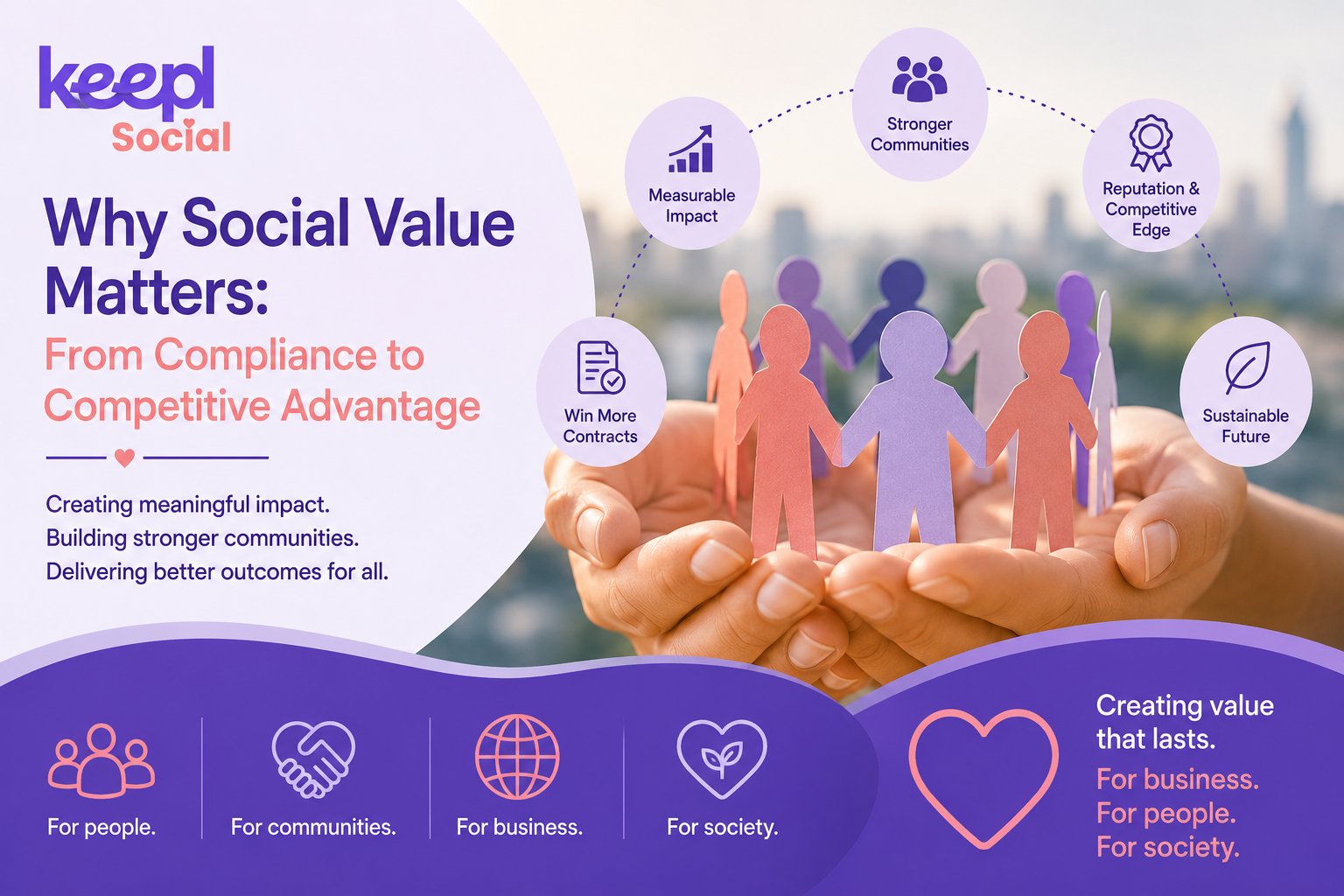
Why Social Value Matters: From Compliance to Competitive Advantage
For many organisations, social value is no longer a ‘nice to have.’ It is an increasingly important part of how public sector contracts are awarded, how businesses demonstrate responsible practice, and how communities benefit from economic activity.
As legislation, procurement policy, and stakeholder expectations continue to evolve, organisations that understand and embed social value are better positioned to win work, strengthen relationships, and create lasting impact.
What is Social Value?
Social value refers to the wider economic, social, and environmental benefits created through an organisation's activities, beyond the core goods or services being delivered.
Examples include:
• Creating employment and apprenticeship opportunities
• Supporting local businesses and supply chains
• Improving skills and education
• Reducing environmental impacts
• Supporting community organisations and charities
• Promoting equality, diversity, and inclusion
• Enhancing health and wellbeing
In simple terms, social value asks a fundamental question:
How can the money we spend create the greatest possible benefit for society?
What is the legislation driving social value?
The importance of social value in public procurement was formalised in 2012, and legislation has continued to evolve to ensure public spending creates value for society.
The Acts are:
• Public Services (Social Value) Act 2012
• Procurement Act 2023
• Economic Crime & Corporate Transparency Act 2023
The growing role of Social Value in Public Procurement.
In recent years, social value has become a significant factor in public sector tender evaluations.
The UK Government introduced a dedicated Social Value Model for central government procurement, ensuring that social value considerations form part of contract award decisions. Many local authorities, housing providers, NHS organisations, and public sector bodies now apply social value weighting within their procurement processes.
For suppliers, this means demonstrating measurable social value is increasingly essential when bidding for contracts.
Those that can evidence meaningful outcomes often gain a competitive advantage over those offering only technical delivery.
Social Value creates better communities
The benefits of social value extend far beyond procurement compliance, and commercial advantage.
When organisations invest in local people, communities become more resilient. Employment opportunities reduce economic inequality. Skills programmes improve career prospects. Community partnerships strengthen local networks and support systems.
For example, a construction project can create value not only through the completed building but also through:
• Apprenticeships for local residents
• Work experience placements for young people
• Volunteering initiatives
• Support for community groups
• Procurement spend with local SMEs and social enterprises
This approach ensures that investment leaves a lasting legacy long after a project has been completed.
Why should businesses care?
Many private sector organisations assume social value only matters when bidding for public contracts.
However, this is increasingly not the case.
Investors, customers, employees, and partners are placing greater emphasis on environmental, social, and governance (ESG) performance. Demonstrating social value can help organisations:
• Win more contracts
• Strengthen stakeholder relationships
• Improve employee attraction and retention
• Enhance brand reputation
• Support ESG and sustainability objectives
• Build stronger local partnerships
Businesses that can clearly articulate their social value are often viewed as lower-risk, more responsible, and more aligned with modern procurement expectations.
Measurable evidence-backed social value reporting
One of the biggest challenges organisations face is demonstrating the value they create.
Good social value reporting moves beyond counting activities, and focuses on measurable activity and transparent evidence.
Rather than simply reporting:
50 volunteer hours delivered
Organisations should seek to demonstrate:
• Improved community wellbeing
• Increased employability
• Enhanced skills development
• Reduced environmental impact
Robust measurement frameworks and capturing qualitative validated evidence help organisations understand, communicate, and maximise their value while providing commissioners and stakeholders with confidence that commitments are being delivered.
The Future of Social Value
The direction of travel is clear. Government policy, procurement reform, ESG expectations, and community needs are all driving greater emphasis on social value.
Organisations that embed social value into their operations rather than treating it as a tender-box exercise will be best placed to thrive.
Social value is not simply about compliance with legislation. It is about creating a stronger economy, healthier communities, and a more sustainable future while delivering successful business outcomes.
The organisations that recognise this opportunity today will be the ones that lead tomorrow.
Managing the operational impact
From bidding to impact we appreciate that business have much to manage, and understand the pressure this places on businesses striving to survive, whilst genuinely trying to do good.
At Keepl Social, we help organisations identify, measure, manage, and communicate social value effectively and efficiently, turning social impact into a strategic advantage that helps businesses win work while creating meaningful benefits for communities.