How technology is simplifying complex processes like Social Value
Social value is becoming increasingly important across procurement, sustainability and corporate responsibility, but managing it can still feel complex and time-consuming. From tracking commitments and collecting evidence to reporting outcomes and supporting tender responses, many organisations rely on fragmented sprea
How technology is simplifying complex processes like Social Value
For years, social value has been recognised as an important part of procurement, sustainability, and corporate responsibility. Yet despite its growing importance, many organisations still find social value difficult to manage.
The challenge isn't usually a lack of ambition. Most businesses want to create positive impact. The challenge is complexity.
Collecting data from multiple teams, tracking commitments, measuring outcomes, producing reports, responding to tender requirements, and demonstrating evidence can quickly become overwhelming.
What should be a strategic opportunity often becomes an administrative burden.
This is where technology is changing the game.
The problem with traditional approaches
Historically, social value management has relied heavily on spreadsheets, emails, shared drives, and manual reporting processes.
A typical organisation might have:
• Apprenticeship data held by HR
• Volunteering records managed by community teams
• Carbon data tracked by sustainability managers
• Supply chain information stored within procurement systems
• Tender commitments documented separately by bid teams
When information is spread across multiple departments and systems, gathering evidence becomes time-consuming and prone to error.
Many organisations only begin collecting information when a report is due or when a tender asks for evidence. By then, opportunities have often been missed and valuable impact has gone unrecorded.
Technology creates visibility
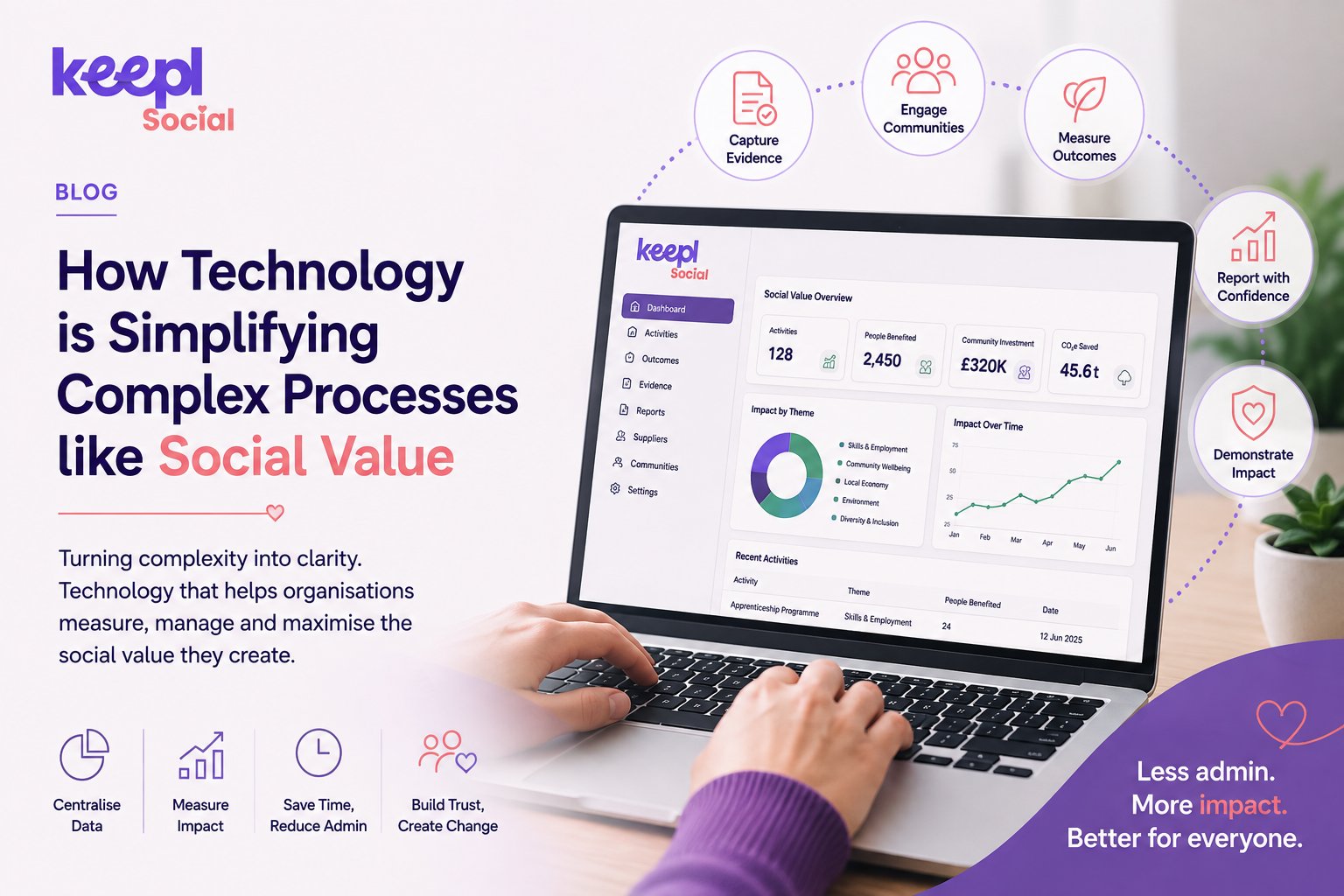
One of the biggest advantages of digital platforms is the ability to bring information together in one place.
Instead of chasing data from multiple sources, organisations can create a centralised view of their social value activities and outcomes.
This visibility helps answer important questions such as:
• What social value are we delivering?
• Where are we creating the most impact?
• Which commitments are on track?
• Which projects need attention?
• How does our performance compare across contracts?
When leaders have access to real-time information, decision-making becomes easier and more effective.
Enabling the quantitative and the qualitative
A common challenge in social value reporting is focusing on what was done rather than what was achieved, with numerous social value frameworks enabling the calculation of the quantitative.
Reporting the activities are important, but stakeholders increasingly want to understand the outcomes they created.
Technology helps organisations connect actions with impact by capturing data consistently and measuring progress over time.
Rather than simply counting inputs, organisations can begin to demonstrate:
• Improved employability
• Increased skills development
• Enhanced wellbeing
• Reduced environmental impacts
• Greater community engagement
This creates a much clearer picture of the value being generated.
Reducing the administrative burden
One of the most significant benefits of technology is automation.
Many social value teams spend countless hours on tasks such as data collection, evidence gathering etc. But many organisations do not have a dedicated social value manager or team, meaning the responsibility is added as an additional requirement to other job roles across the business.
Modern digital systems can automate much of this work.
Data can be collected once and used multiple times across reports, dashboards, tenders, and stakeholder communications. Automated reminders can help teams capture information at the right time, reducing the risk of missing evidence. And functionality can able supply-chain cohesion, community connection, evidence capture and more.
This allows organisations to spend less time managing spreadsheets and more time delivering meaningful impact for their business and society.
Stronger Tender Responses
Social value is now a key scoring component in many public sector procurement exercises.
However, responding effectively often requires organisations to quickly access evidence, demonstrate past performance, and present measurable outcomes.
Without a structured system, this process can become stressful and resource-intensive. Technology enables bid teams to access the information they need effectively and efficiently.
As a result, organisations can produce stronger, more credible tender responses while reducing the effort required to prepare them.
Data Builds Trust
Stakeholders increasingly expect transparency.
Clients want evidence that commitments are being delivered. Investors want confidence that ESG objectives are being achieved. Communities want to understand how organisations are contributing locally.
Technology provides the data and audit trails needed to support these conversations.
When information is recorded consistently and supported by evidence, organisations can demonstrate impact with confidence rather than relying on assumptions or estimates.
This strengthens trust with clients, partners, employees, and communities alike.
Making Social Value Accessible
Perhaps the most important role technology plays is making social value easier to understand and manage.
Social value frameworks, measurement methodologies, procurement requirements, and reporting standards can feel complicated, particularly for smaller organisations with limited resources.
Good technology removes barriers.
It simplifies processes, guides users through requirements and opportunities, automates processes, manage multiple metrics and calculations, and presents information in a way that is easy to understand and act upon.
The result is that organisations can focus less on navigating complexity and more on creating genuine impact.
The Future of Social Value is Digital
As expectations around social value continue to grow, organisations need solutions that allow them to scale their impact without increasing administrative burden.
Technology is not replacing the human element of social value. Communities still need engagement. The delivery of the social activity is human-led. Partnerships still matter. People remain at the heart of positive change.
What technology does is make it easier to capture, manage, measure, and communicate that change.
The organisations that embrace digital solutions will be better equipped to demonstrate their impact, strengthen their competitive position, and maximise the value they create for society.
Technology enables the human element of social value.
Simplifying Social Value with Keepl Social
At Keepl Social, we believe social value should be simple, accessible and affordable.
Social Value must work for businesses for society to fully benefit.
Our platform helps organisations move beyond spreadsheets and fragmented processes by bringing social value management into one place. From tracking activities and outcomes to evidencing impact and supporting tender submissions, technology can transform social value from a reporting challenge into a strategic advantage.
Because creating social value is important. Managing it shouldn't be complicated.